Validate workflows before they support live work
How to test workflow paths with realistic data before your team depends on them.
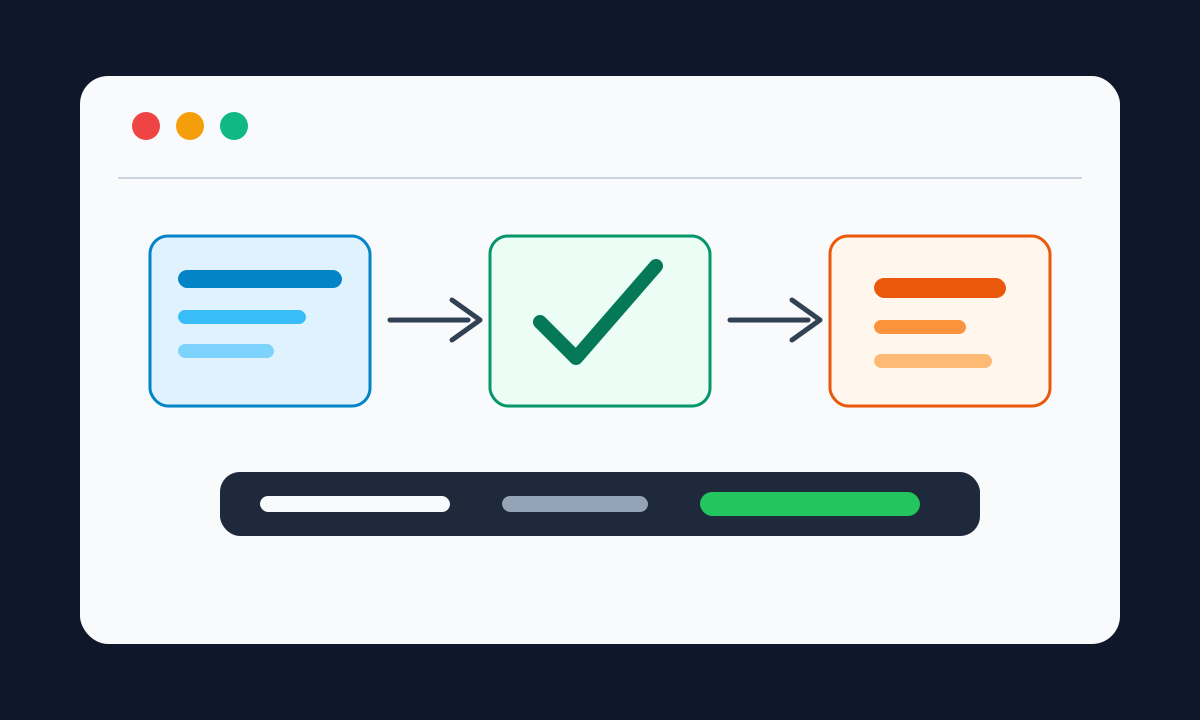
Reliable automation starts before a workflow supports live operations. A team should be able to run realistic examples through the workflow, inspect the path, and fix weak spots before the process affects customers, teammates, or records.
That is the difference between hoping a workflow behaves correctly and knowing how it handled the cases your team expects to see.
Use realistic examples, not perfect samples
A useful validation run should look like the work the workflow will receive later.
For a customer onboarding workflow, that might include the customer's name, company, plan interest, attached documents, handoff owner, and the message the customer wrote. For support triage, it might include an urgent ticket, a vague ticket, a billing question, and a request that should be escalated.
Perfect samples are dangerous because they prove only that the easiest case works. The validation set should include normal cases, edge cases, missing details, and the kinds of inputs that usually cause confusion.
Inspect the path, not only the final result
The final output matters, but it is not enough. Teams also need to see how the workflow reached that result.
Review whether the workflow:
- started from the expected schedule, form, webhook, or app event
- chose the correct branch
- used the right credentials, files, values, or knowledge sources
- collected the required human input
- created the expected message, record, task, or follow-up
- paused or failed in a way the team can understand
This turns testing into operational review instead of guesswork.
Decide what needs human review
Not every workflow should run with the same level of supervision. A daily summary may need only occasional review. A workflow that sends customer-facing messages, changes records, or uses AI-assisted judgment should have clearer review points.
Before relying on a workflow, decide which outputs need approval, which failures should be retried, and which cases should route to a person instead of continuing automatically.
Launch when the review path is clear
A workflow is ready for live work when the team can explain what starts it, what it depends on, what it produces, and how to investigate problems.
Validation is not a one-time checkbox. It is the habit that keeps automation dependable as the work, data, and team expectations change.