AI workflow steps need reviewable source context
How selected knowledge makes AI-assisted workflow steps easier to use, review, and maintain.
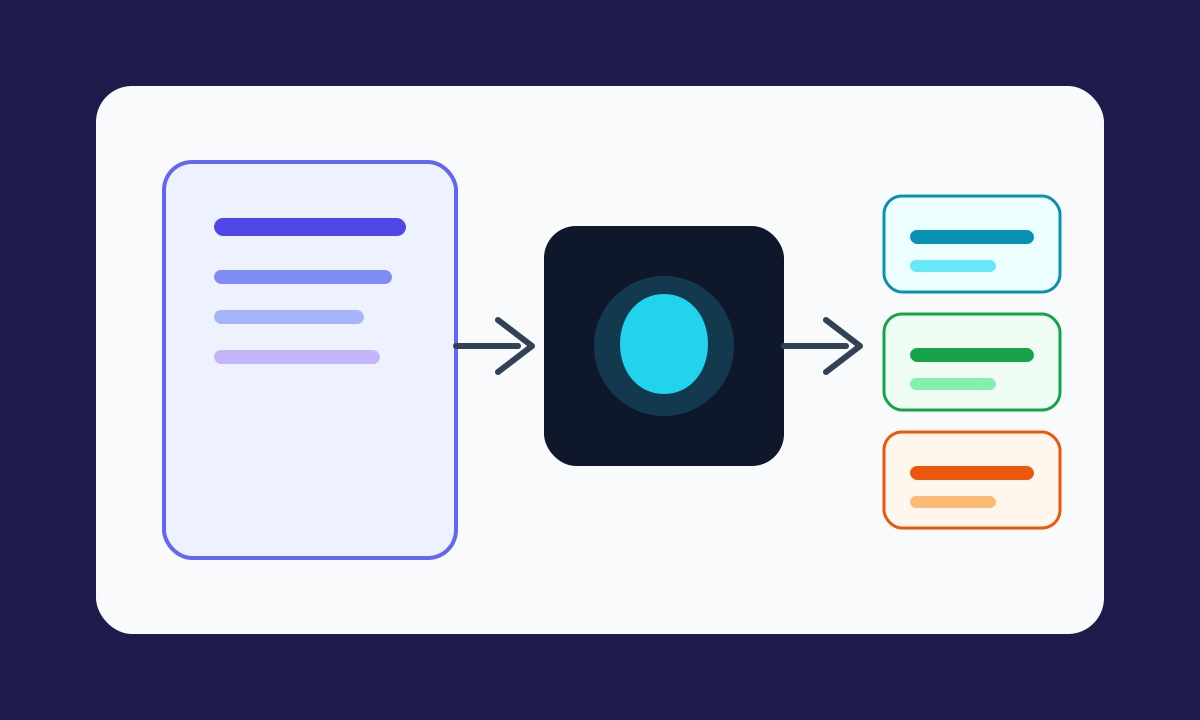
AI can help a workflow draft a reply, summarize a file, classify a request, or suggest a next step. Those jobs are more useful when the AI step works from source material the team selected and can review.
Without source context, AI output can sound confident while still being wrong, outdated, or disconnected from the team's actual process.
Select the knowledge before the prompt
Teams often try to improve AI output by writing longer prompts. That can help, but it does not solve the source problem.
If the workflow needs a policy, product note, help article, contract summary, or internal guide, that material should be managed as selected knowledge. Then the AI-assisted step can use that source instead of relying only on whatever someone pasted into a prompt.
This also makes maintenance easier. When a policy changes, the team updates the source material instead of finding every workflow prompt that copied the old text.
Keep review context close to the output
A reviewer does not need a research report for every AI-assisted result. They do need enough context to judge whether the output came from the right material.
For important workflows, the review path should answer:
- which source material was used
- whether the source is current enough for the job
- what the AI step produced
- where a person should approve, edit, or reject the result
That keeps AI useful without making it opaque.
Give each AI step a specific job
AI steps work best when the workflow asks for one clear outcome.
Good examples include drafting a support reply from approved help content, summarizing an uploaded file for review, classifying a request by topic, or suggesting a follow-up based on submitted answers. Broad prompts that ask AI to "handle the request" are harder to review and harder to improve.
Treat AI as assisted work, not invisible judgment
AI can reduce drafting and review time, but teams should decide where human judgment still belongs.
The durable pattern is simple: choose the source context, define the AI step's job, keep the output reviewable, and route sensitive decisions to a person.